
The core issues to be settled -- access to Hormuz, Israel's aggression in Lebanon, the question of Iran's nuclear programme, sanctions relief and compensation -- are thorny enough to require weeks of patient negotiation. The most likely outcome of the opening sessions is that both sides take the measure of each other, establish what is and is not negotiable, and return home without having broken anything. That would count as progress.

Economists at the University of Warwick, carried out a number of experiments to test the idea that happy employees work harder.


How should one billion Indians, for whom deprivation has become an inescapable way of life, join us in celebrating 75 years of Independence? And where do we go from here? asks Kalyan Singhal.

Crude oil has fallen about 40 per cent since mid June and the price on Monday touched its lowest level since mid 2009 before US oil prices posted their biggest one-day gain in two years overnight.

Not to say that India couldn't have handled the situation better, but on average, it didn't do anywhere near as badly as the naysayers make it out argues Rajeev Srinivasan.

With India poised to become the largest economy in the world by 2030, it cannot afford to leave half of its workforce behind.
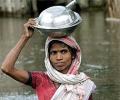
The local labour force is streaming out of the region, creating a vacuum that makes it easier for the Bangladeshis to fill in, says R N Ravi
